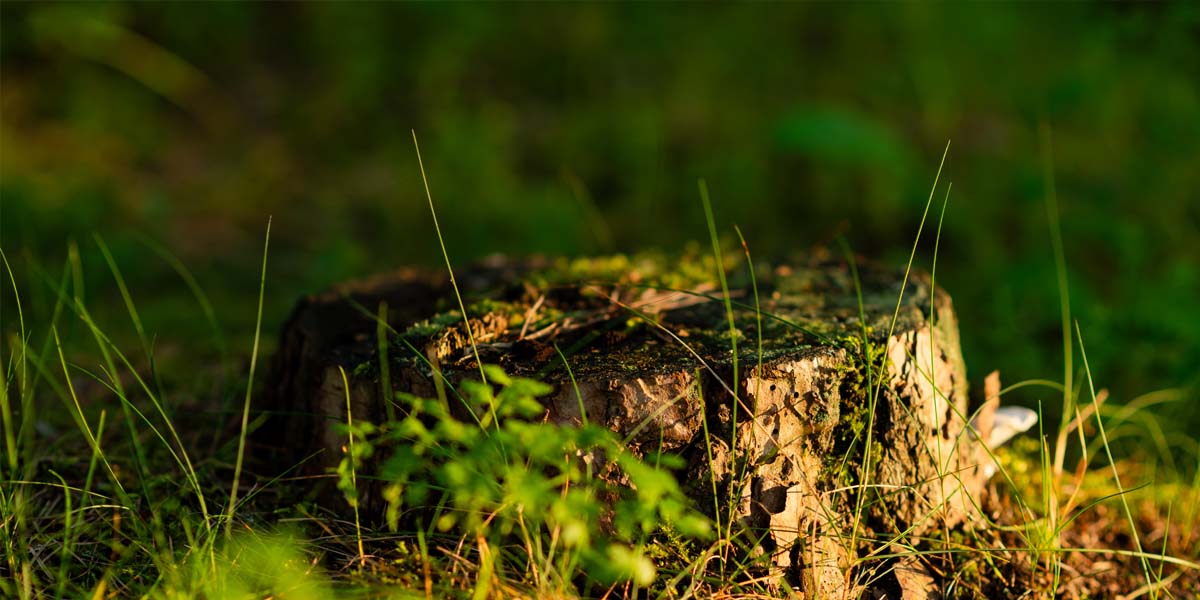

After a tree has been removed, the remaining stump is often left behind. At first, many homeowners assume it won’t cause any problems and will eventually rot away on its own.
However, if you leave a tree stump in the ground, it can create a range of issues over time. Depending on the species of tree, the size of the stump, and where it is located in the garden, the stump may remain solid for many years.
During that time, it can interfere with landscaping, attract pests, or even begin producing new shoots.
Many homeowners across Dorset, Somerset, Wiltshire, Hampshire and the wider South West eventually decide to remove the stump once these problems become noticeable.
In this guide, we’ll explain what typically happens if you leave a tree stump in the ground and why stump removal is often recommended.
Although leaving a stump may seem harmless, problems can build up gradually over time.
A stump can stay in place for many years before it fully breaks down. During this period, it may affect how you use the garden, make future landscaping more difficult, and encourage pests or fungal growth.
For most homeowners, removing the stump early is usually the cleaner and more practical option.
One of the most common assumptions is that a tree stump will simply break down naturally within a year or two.
In reality, this process can take many years.
The exact time depends on several factors including:
• the species of tree
• the size of the stump
• soil conditions
• moisture levels
Hardwood species such as oak or beech can remain intact for a decade or more. Even smaller stumps from softer trees can take several years to fully decompose.
During that time, the stump continues to take up valuable space in the garden.
You can learn more about tree root systems from the RHS.
Some tree species attempt to regenerate after being cut down.
If you leave a tree stump in the ground, it may begin producing multiple shoots around its base instead of dying back completely.
These shoots are sometimes referred to as:
• stump shoots
• suckers
• regrowth stems
This can create a small cluster of new stems emerging from the stump.
If the shoots are repeatedly cut back, the tree may continue trying to regrow for several seasons.
Grinding out the stump removes the source of this regrowth.
As wood begins to break down, it becomes attractive to a variety of insects.
Common insects associated with old tree stumps include:
• beetles
• ants
• wood-boring insects
While many of these insects are a natural part of the decomposition process, they can sometimes become a nuisance in domestic gardens.
In rare cases, insects attracted to a stump may spread to nearby wooden structures such as sheds or fencing.
Removing the stump eliminates this habitat.
Another common issue is fungal growth.
As the wood begins to decay, fungi may develop on or around the stump.
This is a natural process in woodland environments, but it can be undesirable in domestic gardens.
Fungi may appear as:
• mushroom clusters
• bracket fungi
• soft fungal growth around the stump
While not always harmful, fungal growth can spread spores and may indicate ongoing decay beneath the surface.
For further professional tree care guidance, you can visit the Arboricultural Association.
If you leave a tree stump in the ground, it can make future garden improvements more difficult.
For example, a stump may prevent:
• installing new turf
• building decking
• laying patios
• extending driveways
• planting new trees or shrubs
Even if the stump is cut very low to the ground, the roots beneath the soil can still interfere with digging or construction work.
This is one of the main reasons many homeowners remove stumps soon after tree removal.
In gardens used by children or pets, a stump can sometimes create a safety hazard.
Low stumps are not always easy to see, especially if grass grows around them.
When mowing the lawn or walking across the garden, a stump may become an unexpected obstacle.
Grinding the stump below ground level allows the area to be levelled and reused safely.
Even after a tree is cut down, the root system remains in the soil.
In most cases, the roots will eventually die and decompose.
However, large roots may remain underground for many years.
These roots can sometimes:
• make digging difficult
• interfere with landscaping
• remain visible in shallow soil areas
Removing the stump helps prevent these issues.
The most common professional solution for removing tree stumps is stump grinding.
A stump grinding machine uses a rotating cutting wheel to grind the stump down below ground level.
The process typically involves:
1. Grinding the stump into wood chips
2. Removing the stump to a depth below the soil surface
3. Leaving the area ready for backfilling or turfing
Because the stump is ground down rather than pulled out, the process causes minimal disturbance to the surrounding garden.
This is why stump grinding is widely used for residential properties.
If you’d like to learn more about how this works, you can read more about professional stump removal services here.
While some homeowners may temporarily leave a stump in place, removal is strongly recommended in certain situations.
These include when:
• landscaping work is planned
• the stump is producing new shoots
• pests or fungi have appeared
• the stump is large or highly visible
• the stump is close to paths or patios
Removing the stump early prevents the problem from becoming more difficult later.
For most homeowners, the decision comes down to how the garden will be used.
If the stump is small, hidden away and not causing issues, it may be possible to leave it temporarily. However, if you leave a tree stump in the ground for too long, it may cause problems with pests, regrowth, safety or future landscaping.
Professional stump grinding is usually the fastest and most practical way to remove the problem and make the area usable again.
At No More Stumps Ltd, we specialise in stump grinding for residential properties.
We regularly remove stumps for homeowners across:
• Dorset
• Somerset
• Wiltshire
• Hampshire
• the wider South West
Every stump is different, so the easiest way to receive an accurate quote is simply to send a photo or short video of the stump via WhatsApp.
From this we can assess:
• the size of the stump
• access to the garden
• the best machine for the job
You can also learn more about our stump removal services here.
For advice or a quote, you can contact us here.
Yes, but it may cause problems over time such as regrowth, pest activity, fungal growth, trip hazards, or interference with landscaping.
Yes, but natural decay can take many years depending on the tree species and stump size.
Some species can produce new shoots from the stump or surrounding roots.
Stump grinding removes the stump itself and the upper section of the root system. The remaining roots usually decay naturally.
Yes. Once the stump is ground out and the area is backfilled with soil, grass can usually grow normally.
If you have a tree stump in your garden and want to remove it quickly and safely, simply send a photo or short video to No More Stumps Ltd and we’ll be happy to provide advice or a quote.